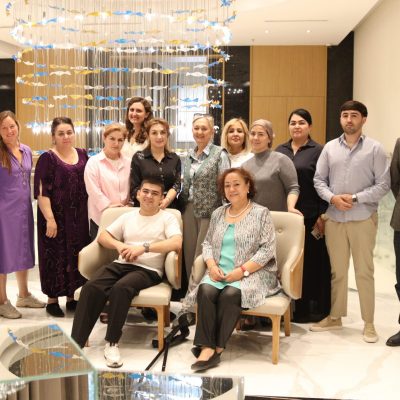
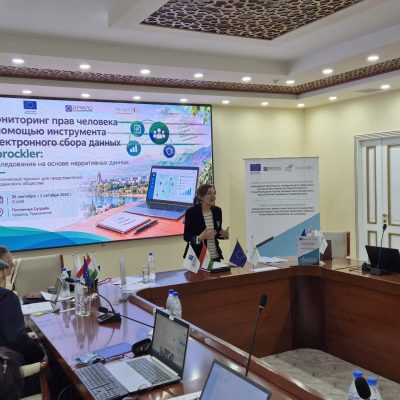
On 11–12 July 2019, the Trans European Policy Studies Association (TEPSA) organized the SEnECA Recommendations Workshop in Brussels. The goal of this fifth SEnECA event was to bring together members of the SEnECA consortium and stakeholders in Brussels to discuss the implementation of the new EU Strategy on Central Asia, adopted by the European Council in June 2019. The strategy gives new depth to cooperation between the two regions, and the members of SEnECA — a project aimed at strengthening EU–Central Asia relations — are highly interested in contributing to and supporting the upcoming implementation process.
During the two-day workshop, discussions were held, and their outcomes will be included in two final SEnECA policy papers, to be presented to the public at the Final SEnECA Conference in Brussels on 14–15 November 2019. Once published, the documents will also be available on the project’s official website.
A highlight of the seminar was the keynote address by the EU Special Representative for Central Asia, Ambassador Peter Burian, who over the past two years has made significant efforts to visit cities across Europe and Central Asia to consult with numerous government officials, private sector representatives, and civil society actors. As Ambassador Burian noted, the resulting strategy “not only looks good on paper but is also supported by our partners in Central Asia and will be fully implemented.” The new strategy focuses on two main goals: a “Partnership for Resilience” and a “Partnership for Prosperity.” These are to be achieved through a mix of existing and new cooperation tools, one of which is the first “EU–Central Asia Forum.” This forum will regularly bring together representatives of civil society, academia, and policymakers from both the EU and Central Asia.
Following Ambassador Burian’s remarks, consortium members Anna Gusarova (CAISS, Kazakhstan) and Dr. Māris Andžāns (LIIA, Latvia) presented SEnECA’s recommendations for the implementation of the new EU strategy. They emphasized the importance of developing both qualitative and quantitative measurement tools to assess the strategy’s impact and regional developments. The researchers also noted that the EU should make greater efforts to improve its image in Central Asia through a carefully designed communication strategy that helps local populations better understand the EU’s values and concrete actions in the region.
The workshop mainly served as a platform for exchanging views among participants on the presented recommendations. Various aspects of the new strategy and ideas for its implementation were discussed in three parallel working groups focusing on: (1) political and security relations, (2) economic relations and trade, and (3) cultural and other relations. Three representatives of EU institutions introduced the respective group topics: Boris Iarochevitch from the EEAS, Maciej Madaliński from DG DEVCO, and Angela Azzori from DG DEVCO. Participants included EU officials, government representatives, embassy staff, researchers, members of international organizations, and civil society actors — a total of 53 participants. The results of the lively debates formed the core of SEnECA’s two final recommendation papers.
The second day of the workshop was devoted to internal consortium discussions and information exchange among partners on the progress of various work packages. The SEnECA project runs from January 2018 to December 2019 and will conclude with the final conference in Brussels on 13–15 November 2019.
SEnECA researchers have prepared 13 policy papers on the development of EU–Central Asia relations and the region’s engagement with other key global actors, 2 background papers on the state of Central Asia studies in the EU and EU studies in Central Asia, and a stakeholder analysis identifying the most relevant actors in EU–Central Asia relations. In the coming months, the project will finalize the Agenda for Future Research Cooperation and a Long-Term Communication Strategy for Central Asia. All published documents can be found on the SEnECA website under the “Policy Papers” section.
More project news is available on the official website:
https://www.seneca-eu.net/
This project has received funding from the European Union’s Horizon 2020 research and innovation programme under grant agreement No. 770256.